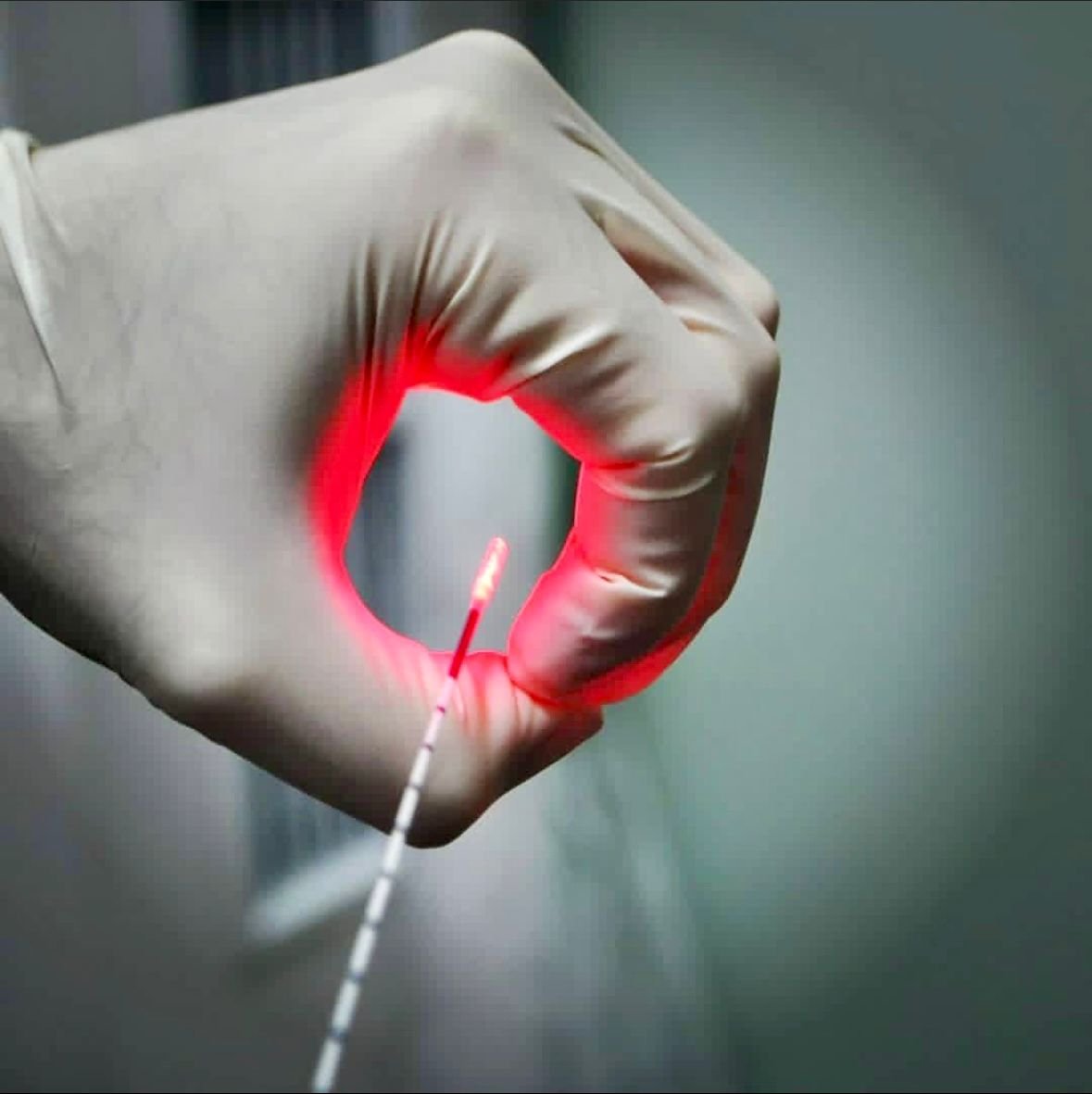
Endovenous laser therapy
Table Of Contents
Contemporary therapy for varicose veins
Therapy of varicose veins with probes inserted into the veins has been developed for more than 20 years. The first scientific reports date back to 1999. The method is mature and is now listed as the first choice in both the European and American guidelines for the treatment of varicose veins.
The classic method of removing the vein using a wire surgically inserted into the vein (the “stripping” method) should be reserved for rare, exceptional cases. Virtually all major vein centers in Europe have completely abandoned this classic procedure.
Advantages of the laser therapy
The advantage of the laser therapy is that it is significantly less invasive. The method does not require any major cuts in the skin. The laser probe can be inserted via a normal indwelling venous cannula, which is also used for administering infusions into arm veins. If smaller branch varices or spider veins are also removed in the same session, skin stitches 2-3 mm long are sufficient. In most cases, visible scars will no longer be visible a few months after the operation.
How endogenous laser therapy works
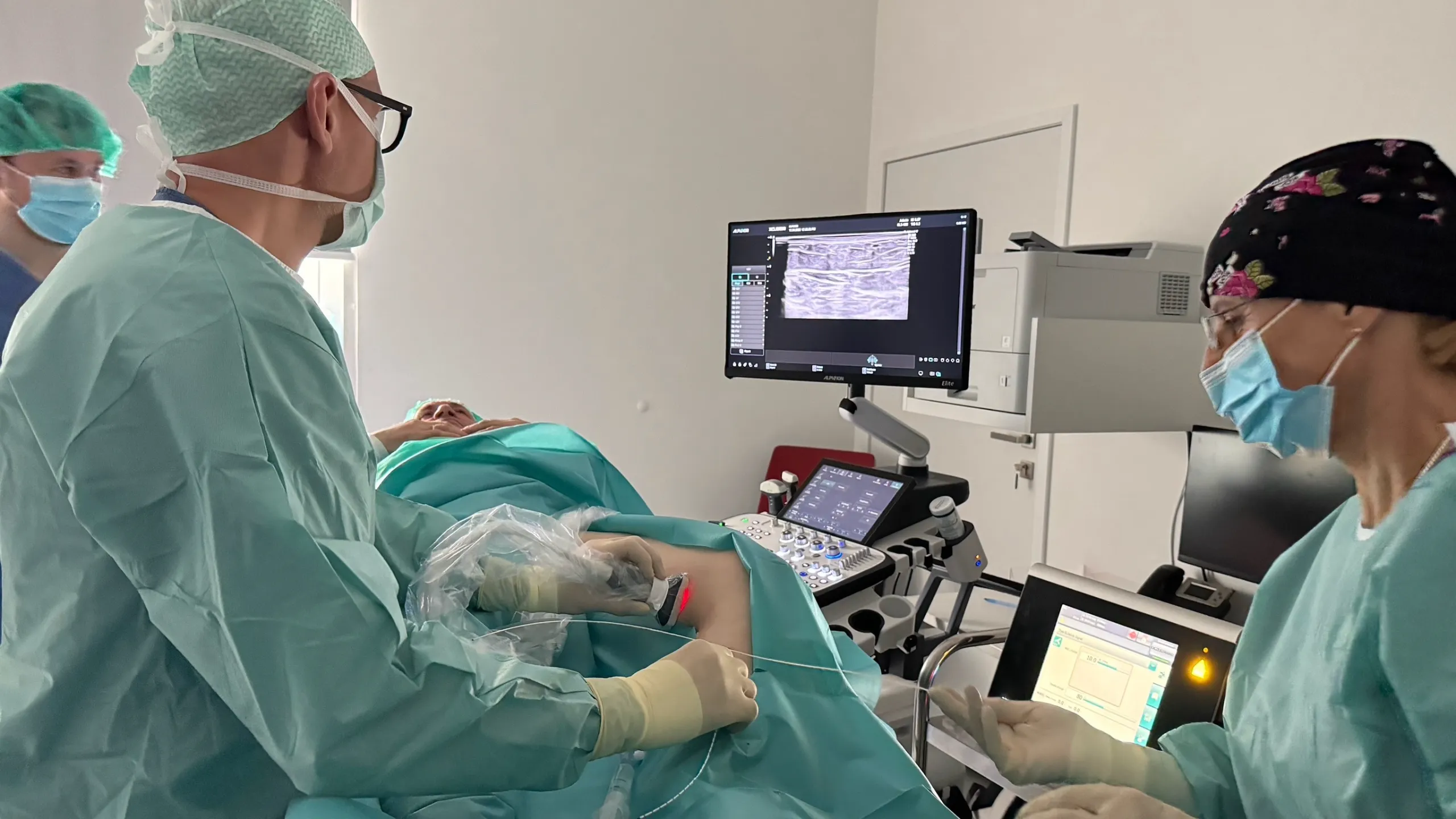
- The saphenous vein with the leaky venous valves is punctured with a small cannula under ultrasound guidance, just in the area of the lower leg.
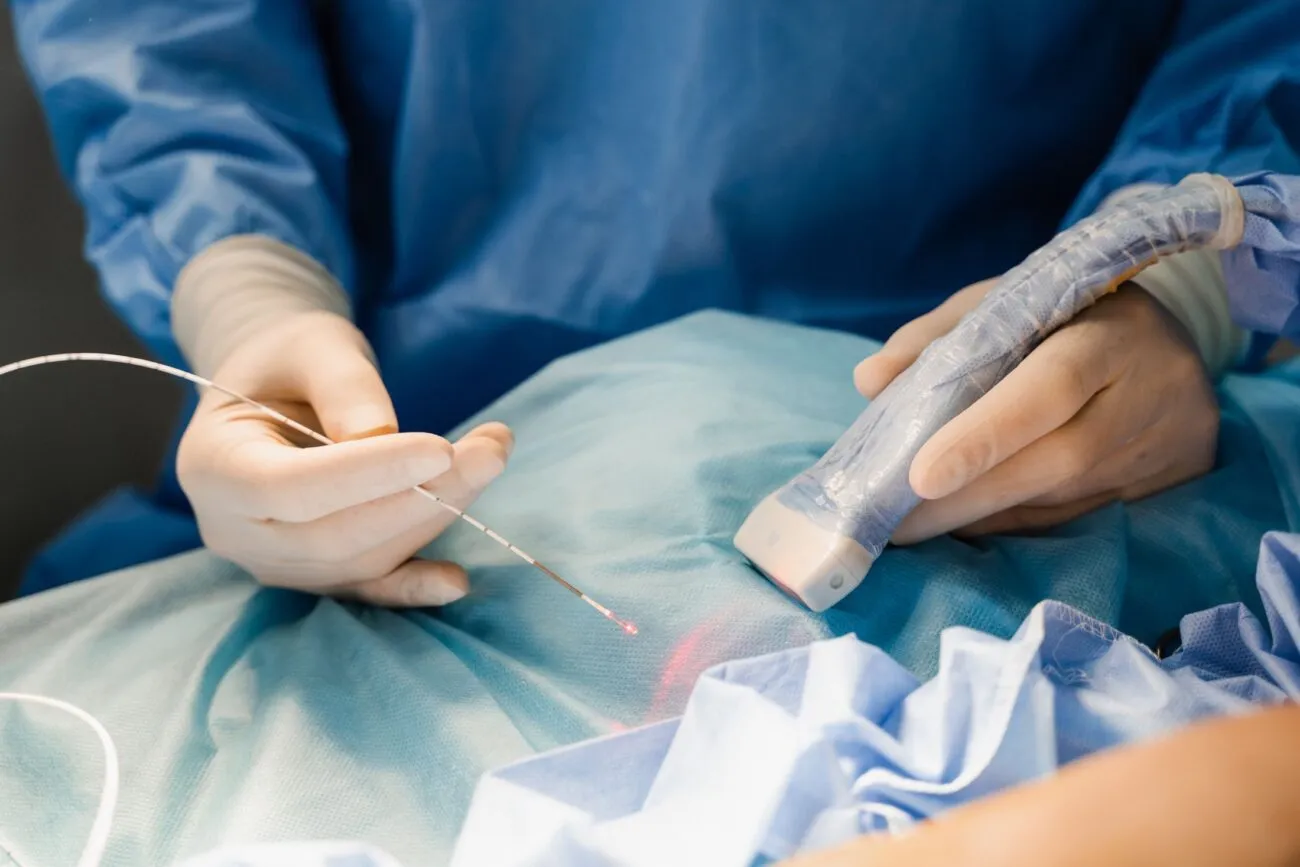
- The laser probe can be threaded into the vein via an indwelling cannula and advanced to the opening region in the groin.
- The subcutaneous fatty tissue around the vein is now bathed with infusion fluid containing a local anesthetic, so that the vein is surrounded by a wide rim of fluid.
- Nun kann der Laser aktiviert werden und die Vene Now the laser can be activated and the vein closed by heat through millimeter-by-millimeter withdrawal of the probe.
- The surrounding fatty tissue and the overlying skin are protected from the heat by the fluid layer.
- At the same time, the added local anesthetic ensures complete pain relief. “Tumescent anesthesia”
- The fluid coating is completely absorbed by the body within 30-60 minutes and excreted via the kidneys.